
Content & Courses · Industry Guide
Texas Universities for Life Sciences & Biotech
Where to Pilot, Validate and Collaborate
- What is it?
- A Texas life-sciences academic ecosystem guide
- Who is it for?
- Biotech and life-sciences innovators entering the U.S.
- Why is it useful?
- Find places to pilot, validate, collaborate and train
About
A UNIVERSITY CAN BE MORE THAN A RESEARCH PARTNER.
It can be the place where you:
- Test a technology.
- Find a scientific collaborator.
- Access specialized equipment.
- Generate early validation data.
- Train future users.
- Develop a manufacturing process.
- Meet clinical investigators.
- Find talent.
- Build credibility in the U.S. market.
That is particularly important for international companies.
You may have strong technology and strong science, but still need a U.S. environment where people can touch it, test it, use it and help validate why it matters.
Texas offers a surprisingly broad range of those environments.
The key is understanding which type of institution you actually need.
FIRST: WHAT ARE YOU TRYING TO ACCOMPLISH?
Before building a university target list, start with the job to be done.
Need to test a laboratory technology?
Look for active research labs, core facilities, biotechnology training programs and investigators already using comparable workflows.
Need scientific validation?
Look for investigators with relevant disease-area, molecular, cellular or translational expertise.
Need clinical validation?
Academic medical centers and health-sciences institutions become more important.
Need bioprocess or manufacturing expertise?
Look for programs with upstream/downstream processing, bioreactors, cell culture, biologics manufacturing and scale-up capabilities.
Need users who can learn your technology?
Workforce and biotechnology education programs may be every bit as important as research universities.
Need an entrepreneurial or commercialization partner?
Look beyond the laboratory to incubators, translational programs, technology commercialization organizations and startup ecosystems.
That distinction matters.
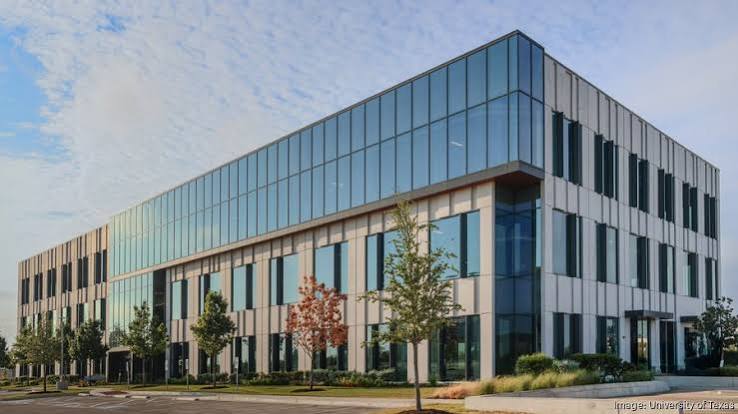
UT AUSTIN
Discovery + Translation + Technology Development
Best for: Early scientific collaboration, biologics, engineering-enabled life sciences, technology development and commercialization.
UT Austin brings together molecular biosciences, engineering, chemistry, computation and medicine, making it particularly useful when a life-sciences technology crosses disciplines.
The university’s growing biologics activity is a good example. Its Texas Biologics initiative supports discovery, early development, clinical translation, production and delivery of biologic therapies, including technology platforms for producing biologics. Texas Biologics
That can make UT Austin especially interesting for companies developing:
Research tools · Biologics · Diagnostics · Automation · Lab technologies · Bioengineering platforms · Data-enabled life sciences
Think UT Austin when you need:
Research collaborators · Technology development · Biologics expertise · Cross-disciplinary science · Commercialization · Early validation
Explore: UT Austin | College of Natural Sciences | Cockrell School of Engineering | Dell Medical School | Discovery to Impact
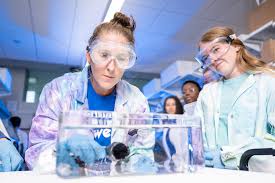
TEXAS A&M
Biomanufacturing + Process Development + Scale-Up
For companies working in biologics or biomanufacturing, Texas A&M deserves special attention.
The National Center for Therapeutics Manufacturing combines workforce training, research and industry collaboration and has capabilities spanning cell culture, molecular biology, aseptic processing, upstream and downstream bioprocessing, mRNA, monoclonal antibodies and recombinant proteins. It also describes bench-to-pilot and Phase I-scale bioprocess and analytical equipment available to support researchers and startups. Therapeutics Manufacturing Center
Its hands-on programs extend into areas such as viral-vector manufacturing and gene therapy, including cell culture, single-use bioreactors, downstream purification and analytical methods. Therapeutics Manufacturing Center
Think Texas A&M when you need:
Biomanufacturing · Process development · Cell culture · Upstream/downstream processing · Scale-up · Manufacturing workforce · Biologics
For a company whose challenge is not just “Does the science work?” but also “How do we make this reliably and at scale?”, that distinction is important.
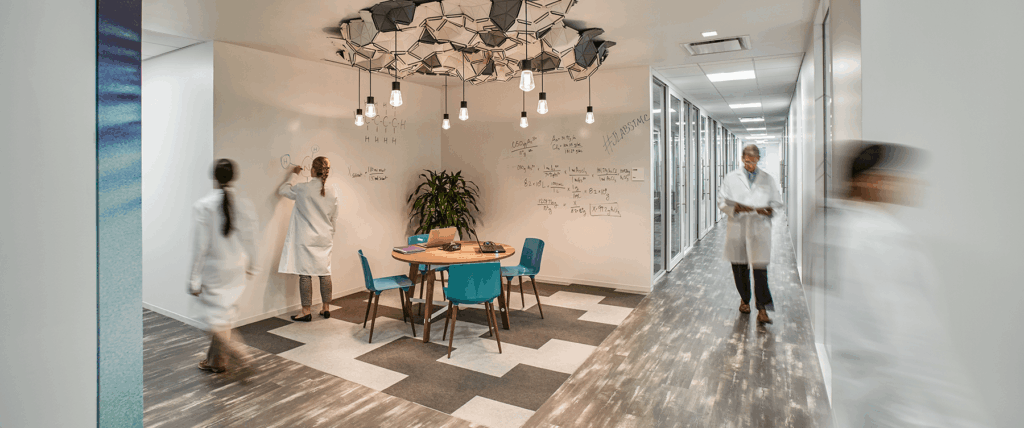
HOUSTON + THE TEXAS MEDICAL CENTER
Translational + Clinical + Disease-Specific Expertise
Houston offers something different.
It combines major academic institutions, hospitals, biomedical researchers and clinical populations in an unusually concentrated environment.
For many companies, the opportunity isn’t one institution. It is the density of institutions and investigators within the Texas Medical Center ecosystem.
UTHealth Houston
Best for: Clinical and translational research, investigator collaboration and health-focused validation.
UTHealth Houston’s Center for Clinical and Translational Sciences supports pilot projects and collaborative translational research across institutions including UTHealth Houston, MD Anderson, UT Tyler, UTRGV, Rice and others. UT Health Science Center
Think UTHealth Houston when you need:
Clinical investigators · Translational research · Human-health applications · Multidisciplinary collaboration · Pilot research
MD ANDERSON CANCER CENTER
Best for: Oncology, cancer biology, therapeutics, diagnostics, immunology and translational cancer research.
For companies specifically targeting cancer, MD Anderson offers a highly specialized environment spanning laboratory research through clinical translation.
Think MD Anderson when you need:
Cancer-specific expertise · Oncology investigators · Translational research · Therapeutics · Diagnostics · Clinical science
BAYLOR COLLEGE OF MEDICINE
Best for: Biomedical research, genetics, precision medicine, advanced therapeutics and translational science.
Baylor adds another major biomedical research environment to Houston and can be particularly relevant when specialized scientific expertise matters more than broad university infrastructure.
Think Baylor when you need:
Biomedical investigators · Molecular science · Translational research · Advanced therapeutics · Disease-specific expertise
RICE UNIVERSITY
Best for: Bioengineering, instrumentation, diagnostics, entrepreneurship and technology commercialization.
Rice is particularly interesting where biology meets engineering.
That can make it a strong target for technologies involving:
Diagnostics · Devices · Biomaterials · Bioengineering · Instrumentation · Computational approaches · Startup development
And through the Rice Alliance, companies can connect the scientific side of the university with Houston’s startup and investor ecosystem.
SAN ANTONIO
Biomedical Research + Translational Science + Specialized Research
San Antonio is sometimes overlooked by companies that immediately gravitate toward Austin or Houston.
It shouldn’t be.
The region combines university research, academic medicine, military medicine and independent biomedical research organizations.
UT San Antonio
The newly combined UT San Antonio brings together the former UTSA and UT Health San Antonio, creating a much broader institution spanning biomedical research, medicine, engineering, public health and clinical science.
For life-sciences companies, that creates opportunities across both traditional academic research and health-sciences environments.
Also look beyond universities.
San Antonio’s life-sciences ecosystem includes specialized organizations such as Texas Biomedical Research Institute, which can be highly relevant for infectious disease, vaccines and other areas requiring sophisticated biomedical research environments.
Think San Antonio when you need:
Biomedical research · Infectious disease expertise · Clinical investigators · Translational science · Specialized research environments
AUSTIN COMMUNITY COLLEGE
A VERY DIFFERENT KIND OF PARTNER
This is one of the places where companies often need to think differently.
ACC is not primarily a research university.
And that can be exactly why it is valuable.
Its biotechnology program is intentionally hands-on and trains students in technologies including cell culture, qPCR, HPLC, sequencing, CRISPR, assay development, quality systems and upstream/downstream biomanufacturing. Austin Community College
ACC is also home to the Bioscience Incubator and the NSF-funded InnovATEBIO National Biotechnology Education Center. Austin Community College District
That creates a different kind of opportunity.
A company introducing a new laboratory technology may need more than a famous investigator.
It may need:
People willing to use it.
A laboratory environment in which to demonstrate it.
Technicians who can learn it.
Feedback from future users.
An educational partner that understands workforce needs.
ACC can potentially play that role.
Think ACC when you need:
Workforce validation · Hands-on users · Biotechnology training · Demonstration environments · Technician development · Applied laboratory education
And importantly, ACC’s program already incorporates internships and relationships with local biotechnology companies, reinforcing its connection to industry rather than purely academic training. Austin Community College
UNIVERSITY OF HOUSTON
BIOTECHNOLOGY + WORKFORCE + APPLIED TRAINING
The University of Houston is another institution worth watching, particularly as Houston builds out its biotechnology and manufacturing workforce.
UH has developed hands-on biomanufacturing programming that brings participants directly into laboratory environments rather than limiting training to classroom instruction.
For international companies introducing laboratory or manufacturing technologies, these kinds of programs can offer a different entry point into the market: education and workforce first, commercial adoption later.
Think UH when you need:
Biotechnology workforce · Applied training · Houston talent · Engineering crossover · Industry education
TEXAS STATE UNIVERSITY
INCUBATION + LAB SPACE + UNIVERSITY ACCESS
Texas State’s STAR Park gives companies another model.
Rather than approaching a university solely through a professor or research laboratory, companies can sometimes enter through a university-affiliated innovation environment.
For early-stage biotechnology and life-sciences companies, that may provide:
Wet-lab infrastructure · University relationships · Startup community · Commercialization support · Physical presence in Central Texas
Think Texas State when you need:
Incubation · Lab space · Early-stage commercialization · Applied university relationships
DON’T FORGET THE REST OF TEXAS
The best scientific partner may not be in Austin or Houston.
Depending on the technology, companies should also investigate:
UT Southwestern — Dallas
Biomedical research, academic medicine and translational science.
UT Dallas — Richardson/Dallas
Bioengineering, technology development, computation and engineering.
UT Arlington — Arlington
Engineering, health sciences and applied research.
UNT / UNT Health — North Texas
Biomedical science, pharmacy, medicine and research.
UTMB — Galveston
Biomedical sciences, clinical research and infectious-disease expertise.
UT Tyler — East Texas
Medicine, health sciences and regional research capabilities.
UT Rio Grande Valley — South Texas
Medicine, health sciences, engineering and border-region research.
UT El Paso — West Texas
Biomedical sciences, engineering and health research.
Texas Tech / Texas Tech Health Sciences Center — West Texas
Biomedical science, pharmacy, medicine, engineering and regional health research.
For a specialized technology, geography may be secondary to who has the right investigator, facility, equipment or user population.
FOUR WAYS TO USE THE UNIVERSITY ECOSYSTEM
This is where I think the article becomes particularly useful for LaunchPad companies.
1. RESEARCH COLLABORATION
Find an investigator whose scientific interests align with your technology.
This might involve:
Feasibility studies · Comparative testing · New applications · Method development · Joint research
The objective is usually scientific learning and evidence.
2. PILOT + VALIDATION
Sometimes the need is much more practical:
Will this work in a real lab?
A pilot can help a company understand:
Does the technology fit existing workflows?
Can users learn it easily?
Does it produce reproducible results?
What problems appear outside your own laboratory?
What evidence will future customers want?
That kind of validation can be enormously valuable before broad U.S. commercialization.
3. WORKFORCE + TRAINING
This is easy to underestimate.
For certain products, adoption depends on having enough people who know how to use the technology.
Educational institutions can therefore become:
Training partners.
Demonstration sites.
Sources of future employees.
Places where future customers first encounter a technology.
That makes workforce strategy part of commercialization strategy.
4. TRANSLATION + COMMERCIALIZATION
Universities can also help bridge the gap between:
“This is interesting science.”
and
“This can become something people use.”
Look for programs that combine science with product development, industry collaboration, entrepreneurship, clinical translation or commercialization.
Those groups can often help companies understand not simply whether something works, but what must happen next.
A PILOT DOESN’T HAVE TO BE A CLINICAL TRIAL
This distinction is especially important for international companies.
When we say pilot, that can mean many different things:
A researcher evaluates your instrument.
A biotechnology class incorporates your technology into training.
A laboratory compares your workflow against an existing method.
A collaborator tests the technology on a new sample type.
A manufacturing program evaluates a piece of equipment.
A core facility provides feedback from experienced users.
An academic team generates initial data.
Not every first U.S. validation project needs to become a large sponsored research agreement or clinical study.
Sometimes what you need first is simply:
A credible environment. A real user. And useful data.
That can be enough to unlock the next conversation.
SO — WHERE SHOULD YOU START?
Need basic or translational research?
Look at UT Austin, Baylor College of Medicine, UT Southwestern, UTHealth Houston and other R1 research institutions.
Need oncology expertise?
Start with MD Anderson and the broader Houston ecosystem.
Need biologics or biomanufacturing?
Look closely at Texas A&M’s National Center for Therapeutics Manufacturing, as well as biotechnology and biomanufacturing programs across the state.
Need clinical investigators?
Explore the major academic medical centers.
Need engineering + biology?
Look at UT Austin, Rice, Texas A&M, UT Dallas and University of Houston.
Need hands-on biotech workforce or training?
Consider Austin Community College and other applied biotechnology education programs.
Need incubation or laboratory space?
Look at Texas State STAR Park, university incubators and regional life-sciences accelerators.
Need something highly specialized?
Follow the science rather than the university brand.
Find the investigator, core facility, lab, center or training program that matches the technology.
THE BIGGER LESSON
The Texas university ecosystem is not simply a source of academic research.
For a life-sciences company entering the United States, it can become part of the commercialization pathway.
Research.
Validation.
Pilots.
Training.
Talent.
Manufacturing.
Clinical collaboration.
Credibility.
The strongest starting question isn’t:
“Which university should we approach?”
It is:
“What do we need to prove, learn or accomplish next?”
Then find the Texas institution built to help you do it.
RELATED RESOURCE
Navigating Texas Universities
A broader guide to research, commercialization, clinical and academic partners across the state.
This life-sciences guide is intentionally more specialized than the broader university resource we developed first. The earlier draft explicitly separated the two so the general article could serve medtech, digital health and life sciences companies while this one could go deeper into laboratory environments, cell culture, biomanufacturing and academic pilots.
Articles, Tools & Additional Resources
Texas Universities for Innovators
A practical guide to the Texas university and academic ecosystem for health tech, medtech and life sciences companies looking for research…
Business of American Healthcare
The Business of American Healthcare is an on-demand UT Austin course exploring how the U.S. healthcare system works.
Disclaimer:
Prepared by LoneStar LaunchPad / Green Room Technologies for educational and informational purposes. This resource highlights selected Texas universities, academic medical centers and biotechnology programs and is not intended to be an exhaustive directory, ranking or representation that any institution will accept or participate in a commercial pilot. Programs, facilities, research priorities and partnership opportunities change. Companies should verify current information and requirements directly with the relevant institution.